

Some letters begin with a sentence you have been carrying for years.
Others begin because it is 12:43 in the morning, you have rewritten the same text six times, and you finally realize you should not send any version of it.
You still need somewhere to put the words.
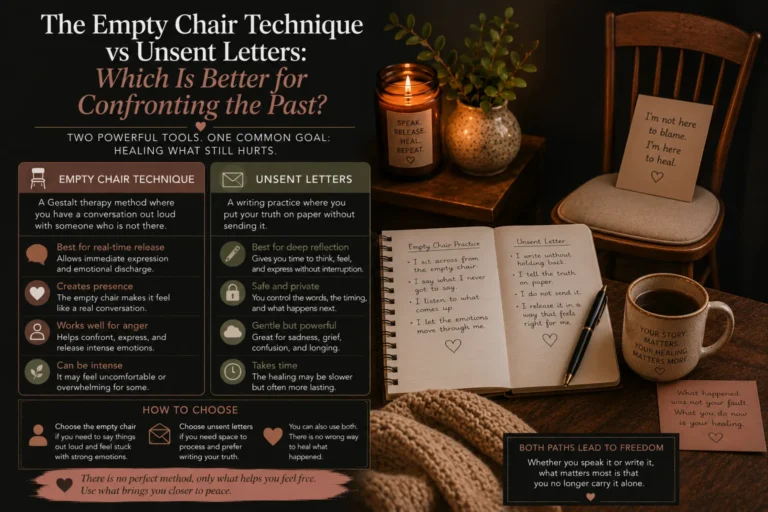
That is what an unsent letter can offer.
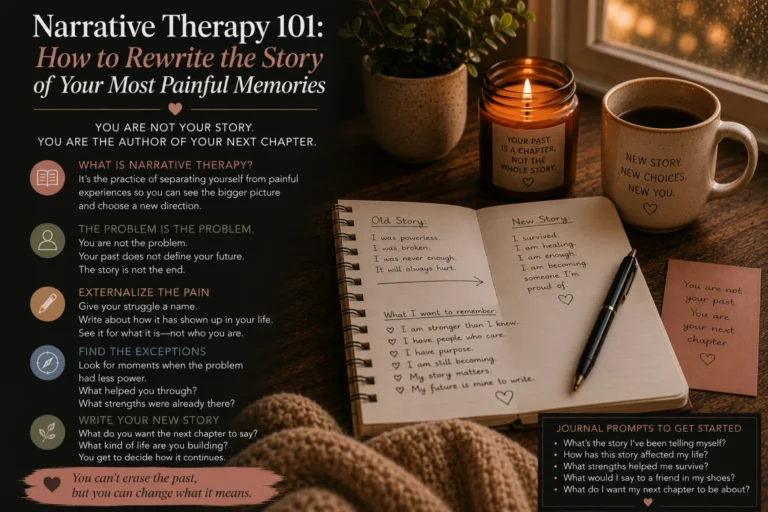
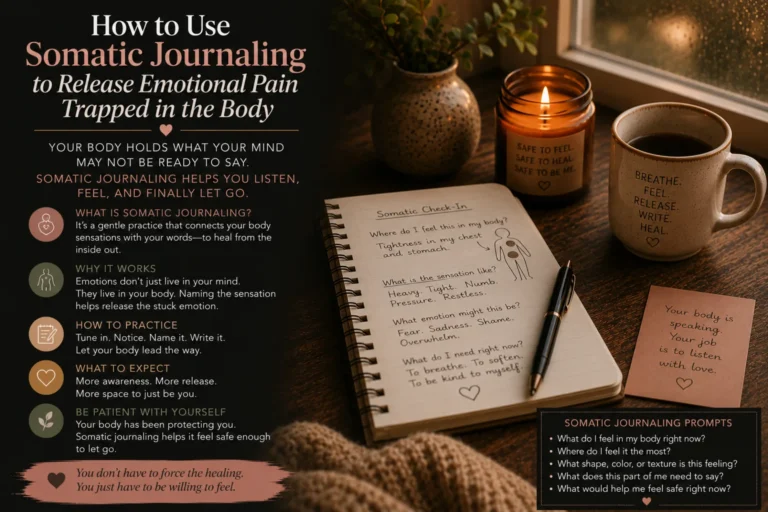
It is a place to write honestly before you decide what the truth requires of you. It may become a private record, a release valve, a way of noticing what has been sitting underneath the obvious emotion. It may help you understand why a certain memory still has teeth. It may show you that the conversation you keep rehearsing is not actually the conversation you need.
Not every letter needs to be deep. Not every page needs to end with forgiveness. Some letters are awkward. Some are furious. Some are only four lines long.
A prompt is not a command. It is simply a door.
Open the one that feels useful. Leave the rest alone.
Before You Begin
Do not try to sound wise.
Do not write as though the person will read it unless you have already decided that they might. The first version is for you. It does not need good manners. It does not need a lesson at the end.
Write for ten minutes if that feels manageable. Stop sooner if the writing becomes too much. If you notice yourself spiraling into old messages, imagined arguments, or hours of replaying the same scene, put the page away for the day.
There is no prize for making yourself miserable with a notebook.
When You Do Not Know What You Need to Say Yet
Sometimes the hardest part is not the writing. It is finding the first honest sentence.
1. What I have never said out loud is…
Begin with the sentence you usually edit out.
2. I keep thinking about the moment when…
Choose one moment. Stay close to what actually happened before trying to explain it.
3. The part that still bothers me is not what most people would expect. It is…
Sometimes the smallest detail carries the sharpest edge.
4. If I knew you would not interrupt me, I would tell you…
Write without preparing a defense.
5. I wish you understood that…
Do not worry yet about whether they are capable of understanding it.
6. I am tired of pretending that…
This prompt often reaches the place polite language avoids.
7. The sentence I keep rehearsing in my head is…
Write the familiar sentence first. Then ask what sits underneath it.
8. What I needed then, but did not know how to ask for, was…
Try to name the need without judging yourself for having it.
9. I do not know whether I am angry, sad, or disappointed. Maybe I am…
Allow several answers. Feelings rarely arrive one at a time.
10. If I stopped trying to sound reasonable for five minutes, I would say…
Reasonableness has its place. So does honesty.
Letters to Someone You Miss
Missing someone does not always mean you should call them. It does not always mean the relationship should return. Sometimes missing someone is simply the cost of having loved a person who is no longer part of your ordinary day.
11. I miss the version of us that…
Be specific. A season, a habit, a room, a joke nobody else understood.
12. The ordinary thing I miss more than I expected is…
Grief often hides inside grocery stores, morning routines, and empty passenger seats.
13. I wanted to tell you what happened today because…
Write the story as though you were telling it to them.
14. I still reach for my phone when…
Notice the moments when your body remembers the relationship before your mind catches up.
15. What I miss may not be you exactly. It may be…
Maybe it was safety. Familiarity. Hope. Being known. Having someone nearby.
16. The memory I return to when I want to remember the good is…
Let the memory remain good without forcing it to carry the entire relationship.
17. There are things about you I do not want to forget, including…
Details matter. The way someone laughed can outlast a surprising amount of time.
18. I wish we could talk once more about…
Do not rush to answer the question for them.
19. If I saw you unexpectedly, the first thing I would want to say is…
The answer may surprise you.
20. I miss you, but I do not miss…
Missing someone and protecting yourself can belong on the same page.
Letters to Someone Who Hurt You
There are letters that should remain private because the other person has already shown you what they do with your vulnerability. Writing the truth does not obligate you to hand it back to them.
21. What hurt was not only what you did. It was also…
Maybe it was the denial afterward. The silence. The way other people acted as though nothing happened.
22. I am angry that I had to carry…
Name the part that became your responsibility when it should not have been.
23. The moment I realized I could not trust you was…
Write the scene plainly. You do not have to make it dramatic.
24. I kept giving you the benefit of the doubt because…
There may have been love in that choice. There may also have been fear.
25. I wish I had believed myself sooner when…
Write to the part of you that noticed before you were ready to act.
26. You made me question whether…
This is especially useful when hurt was followed by minimization or denial.
27. I am still paying for something you may barely remember…
Some people leave damage behind without understanding its size.
28. I do not need you to agree that it happened for me to know…
Write the sentence your memory needs.
29. The apology I needed from you would have sounded like…
Do not write the apology they would probably give. Write the one that would have mattered.
30. I am no longer willing to carry…
This may become a boundary, even if the other person never sees it.
Letters After a Breakup
A breakup can turn the mind into an unreliable historian. It plays the sweetest scenes on repeat and quietly misplaces the reasons the relationship ended.
31. I know why we ended, but part of me still wishes…
Let the contradiction exist without treating it as a decision.
32. The future I imagined with you included…
Sometimes you are grieving a person. Sometimes you are grieving a life that never happened.
33. I keep wanting to contact you when…
Notice the trigger. Loneliness has a schedule more often than we realize.
34. The things I miss are real. So are the reasons I left, including…
Write both sides on the same page.
35. The last conversation I wish we could have had would begin with…
Say what remained unfinished.
36. I am embarrassed that I…
Heartbreak can make people behave in ways they barely recognize later. Write with some mercy.
37. The part of our relationship I romanticize is…
Then write what your memory tends to leave out.
38. If you asked to come back today, I would need to remember…
This is a letter for a weak afternoon.
39. I wanted you to choose me because…
The answer may reach farther back than the relationship.
40. I hope you are well. I also need to admit that…
Kindness and resentment sometimes sit beside each other without speaking.
Letters to a Parent
Letters to parents are often complicated because childhood does not stay in childhood as neatly as people like to pretend. A grown adult can still feel twelve years old in the middle of a five-minute phone call.
41. What I needed from you when I was young was…
Keep it simple at first.
42. I know you had your own pain. I also need to say…
Understanding a parent’s past does not require pretending their choices had no effect.
43. The memory from childhood I still carry is…
Describe what happened without talking yourself out of your own reaction.
44. I became good at reading the room because…
Some skills begin as survival.
45. I wish you had noticed…
Write the thing you kept hoping an adult would see.
46. I am grateful that you…
Let gratitude be honest. It does not have to erase anything else.
47. I am angry that you…
Anger toward a parent can feel disloyal. It is still allowed on a private page.
48. There are things I learned from you that I want to keep, including…
Not every inheritance is painful.
49. There are things I learned from you that I am trying to unlearn, including…
Name the pattern before it becomes automatic.
50. I am no longer a child waiting for you to…
Finish the sentence slowly.
Letters to a Child, Grown Child, or Younger Relative
Love can become tangled with regret. Parents and caregivers often carry old conversations long after everyone else has left the room.
51. I hope you always know that…
Write what you want them to remember on a difficult day.
52. I am sorry for the times I…
Avoid the vague apology. Name what you wish you had handled differently.
53. I was trying to protect you when…
Then ask whether protection may have felt like control.
54. I wish I had listened better when…
Do not rush to explain yourself.
55. There are things I want to tell you, but I do not want to place a burden on you. One of them is…
Some truths belong on paper before they belong in a conversation.
56. Watching you grow has made me realize…
This can be tender. It can also be uncomfortable.
57. I worry that I passed down…
Write without turning guilt into a permanent identity.
58. I hope you carry forward…
Name the good things too.
Letters to a Friend You Lost Along the Way
Not every important relationship ends with a dramatic betrayal. Some simply thin out. One missed call becomes six months. Six months becomes years.
59. I do not know exactly when we stopped being part of each other’s lives, but…
Write what you noticed.
60. The thing I still laugh about when I think of you is…
Friendship has its own archive.
61. I wish I had shown up better when…
Some friendships deserve an honest accounting.
62. I was hurt when…
Do not dismiss the pain because the relationship was not romantic.
63. I wonder what your life looks like now. I hope…
Let goodwill exist without demanding a reunion.
64. If we sat down for coffee tomorrow, I think I would say…
Imagine the conversation without deciding whether it needs to happen.
65. I miss the person I was when we were friends because…
Sometimes a friendship holds an entire season of your life.
Letters to Someone Who Died
There is no correct tone for a letter to someone who died. You are allowed to be grateful. Angry. Funny. Tired. You are allowed to talk about the weather.
66. Something happened today that I wish I could tell you about…
Write it as naturally as you would have said it.
67. I understand something now that I did not understand when you were here…
Time changes the conversation.
68. The thing I miss most today is…
The answer may be different next week.
69. I am angry with you for…
Love does not require grief to be polite.
70. I wish I had asked you…
Keep the questions. They matter even when no answer comes.
71. I want you to know that I am doing…
Tell them about your life as it is, not only as you wish it were.
72. I still hear your voice when…
Memory can be startlingly specific.
73. The story about you I never want our family to forget is…
Write it down before the details blur.
74. I feel closest to you when…
Notice where the relationship still appears.
75. I do not know what I believe about where you are now, but I want to say…
You do not have to settle every question before writing the letter.
Letters to Your Younger Self
A letter to your younger self can become sentimental very quickly. It can also become harsh. Try not to write as though the person you were should have known everything you know now.
They were doing their best with less information.
76. You were not difficult for needing…
Write to the age that first learned to apologize for having needs.
77. I wish someone had told you…
Say the thing plainly.
78. You kept trying to earn…
Maybe it was approval. Safety. Love. A quiet room.
79. You blamed yourself for…
Write what never belonged to you.
80. I understand now why you stayed when…
Compassion is more useful than a lecture.
81. You were stronger than you should have had to be when…
Do not turn survival into a requirement.
82. The mistake I forgive you for is…
You may have been trying to get through the day.
83. The part of you I want back is…
Not everything from the past needs to remain there.
84. I am sorry I became embarrassed by…
Write to the version of you who liked things without checking whether they were impressive.
85. You made it through something you did not think you would survive. I want you to know…
Avoid slogans. Tell the truth.
Letters to Your Future Self
A future-self letter does not need to predict a perfect life. It can simply preserve what you know today before time edits the story.
86. I hope you remember why you finally decided to…
Write this before doubt becomes persuasive.
87. Please do not return to…
Leave yourself a record for the day nostalgia becomes selective.
88. I hope you have learned how to…
Choose something quiet and practical.
89. Right now, I am worried about…
Your future self may see the problem differently.
90. I want you to remember the people who…
Write their names.
91. If life is easier when you read this, please do not forget…
Hard seasons teach things comfort can blur.
92. If life is harder when you read this, I hope you remember…
Write the kind of sentence you would trust on a bad day.
Letters You May Need to Write Before Sending Anything
Some messages should wait. A private draft can reveal whether you want a conversation, an apology, a reaction, or simply relief from the discomfort of silence.
93. I want to send this because…
Be more honest than respectable.
94. The response I secretly want from you is…
Write the exact fantasy version.
95. If you never replied, I would feel…
The answer may change whether the message should be sent.
96. If you replied in the worst possible way, I would…
Think about the cost before reopening contact.
97. The sentence I truly need you to hear is…
Remove the paragraphs written mainly to punish.
98. The sentence I may need to tell myself instead is…
The two sentences may not be the same.
Letters for Letting Something End
Not every ending feels peaceful. Some are simply necessary.
99. I am tired of waiting for…
Name what has kept part of your life on hold.
100. I release myself from the responsibility to…
You may have taken on a job nobody asked you to carry.
101. This is the last letter I am writing about this for now. What I want to leave on the page is…
Do not force a permanent ending. “For now” is enough.
What to Do With the Letter Afterward
You can keep it.
You can close the document and never read it again. You can fold the page into a drawer. You can tear it up. You can write a calmer second version after a few days and decide whether that version belongs in a real conversation.
You can also stop halfway through.
The value of an unsent letter is not measured by its length. It is not measured by how poetic it sounds or whether you arrive at a neat conclusion. If you are wondering what to do with the letter afterward, remember that the point is often what it lets you notice.
Some letters uncover a truth.
Some simply move a thought out of your head long enough for you to sleep.
That is enough for one night.
Use the Prompts Gently
You do not need to finish every prompt that catches your attention.
Some questions will feel useful today. Others may be better left alone. If a prompt begins pulling you into a memory that feels too large, close the page and return to something ordinary: a walk, a meal, a familiar voice, the room around you.
Writing is allowed to stop before the story feels complete. If certain memories keep overwhelming you or begin affecting your daily life, consider working through them with a qualified mental-health professional rather than forcing your way through them alone.
Take one practical next step
You have the information. Now use the next resource to make the next decision clearer and easier to follow through on.