
Most mistakes with unsent letters come from treating them like a performance instead of a release. The letter doesn’t need to be fair, polished, wise, or even especially coherent at first. It just needs to tell the truth well enough that your body stops having to hold all of it alone.
That sounds simple, and then people sit down to write one and immediately start doing very human things with it. Editing. Explaining too much. Trying to sound calm. Trying to sound good. Trying to make the other person understand in exactly the right order, with exactly the right tone, as if there’s still a chance to win the argument on paper.
That’s usually where the letter starts to go flat.
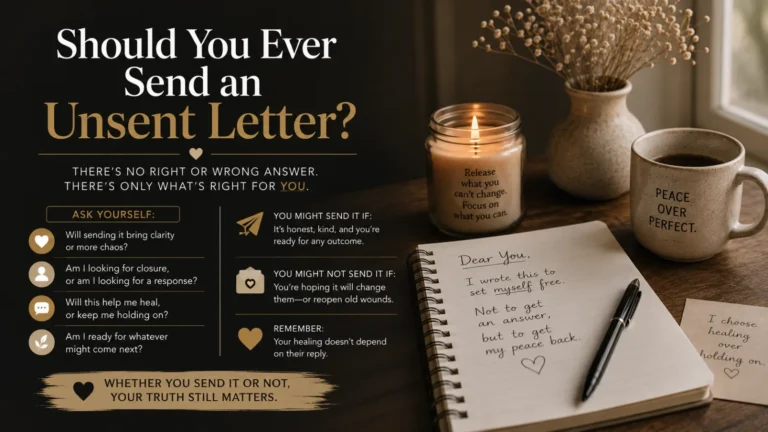
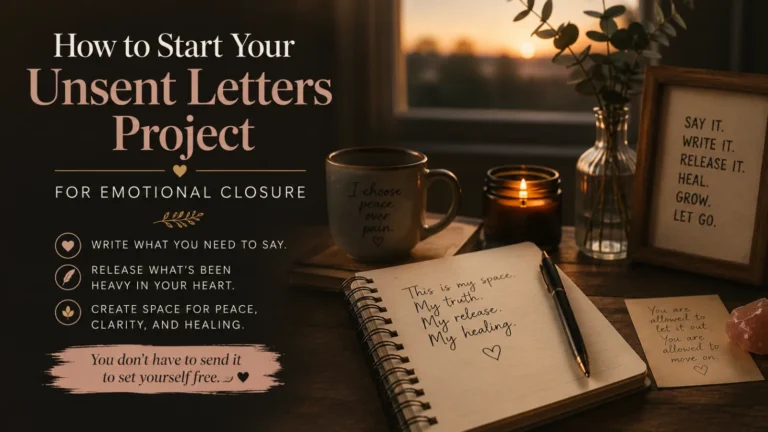
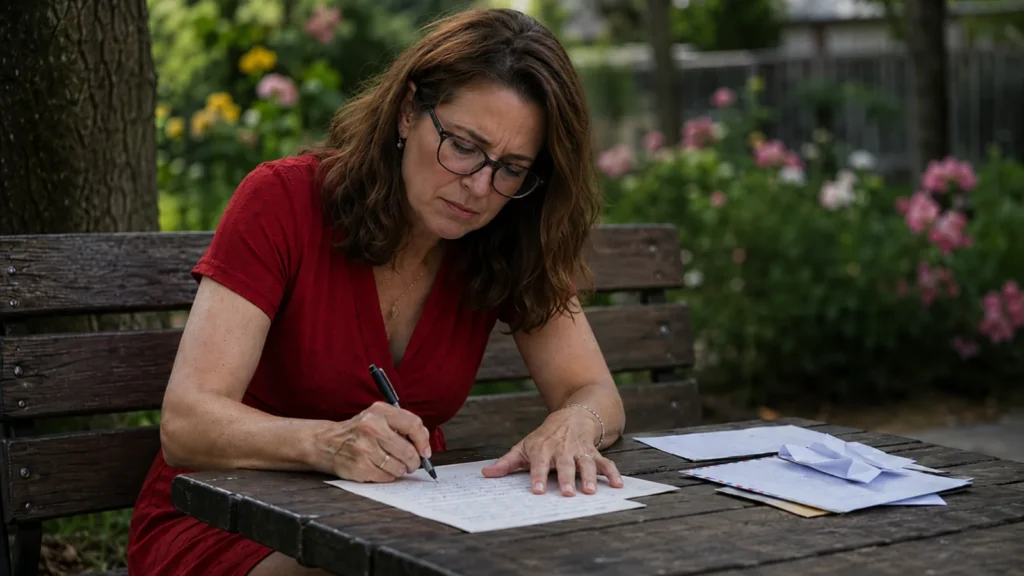
An unsent letter is private writing meant to say what has nowhere safe to go. Maybe it’s anger. Maybe grief. Maybe the version of the conversation you never got. Maybe it’s all of that at once. The point isn’t to create a balanced document. The point is to let something real become visible.
Trying to make it sound reasonable too soon
This is probably the most common mistake, especially if you’re used to managing other people’s reactions.
You sit down with something raw and instantly start translating it into acceptable language. You replace “I’m furious” with “I was disappointed.” You soften every sentence. You add context the other person never asked for in real life. You become careful before you’ve become honest.
That carefulness can make the whole letter feel emotionally dead.
There’s a place for nuance. There’s a place for compassion. There’s even a place for seeing the other person clearly. But not in the first pass if what you really need is release. If your chest is tight and your jaw is set and your brain keeps replaying the same moment, you probably don’t need polished phrasing. You need the actual sentence.
Not the respectable sentence. The true one.
This doesn’t mean being cruel for sport. It means letting the draft be emotionally accurate before you ask it to be mature.
Writing to persuade instead of writing to uncover
A lot of unsent letters quietly turn into legal briefs.
You build a case. You line up examples. You explain what happened in minute detail. You imagine the other person finally reading it and having no choice but to admit you were right.
Understandable. Also usually not the point.
If you spend the whole letter trying to convince an imaginary reader, you can miss what’s happening inside you while you’re “making the argument.” Sometimes the real sentence isn’t “you were unfair.” Sometimes it’s “you embarrassed me and I still haven’t gotten over it.” Or “you left, and part of me still feels stupid for needing you.” Or “I hate that I wanted one kind word from you for so long.”
That’s the part people often circle around.
Persuasion keeps you in debate mode. Uncovering gets you closer to the bruise. And the bruise is usually why you’re writing.
Staying on the surface because the deeper thing is harder to admit
Sometimes the letter is full of facts and still somehow says almost nothing.
You mention what happened. You mention what was said. You mention who failed to show up, or who crossed the line, or who acted like nothing happened after. But the emotional core stays hidden under all that reporting.
The deeper thing is often smaller and harder to say, which is probably why it gets skipped.
Things like:
- You wanted to be chosen.
- You were ashamed of how long you kept hoping.
- You’re still angry that an apology never came.
- You didn’t just lose the person. You lost the version of life you thought you were getting.
That’s the territory people avoid because it feels exposed. It can even feel a little melodramatic when you first write it down. Sometimes people delete the most important line because it makes them cringe on sight.
That’s not always a sign the line is wrong. Sometimes it’s a sign it hit something real.
Using the letter to rehearse contact you already know isn’t safe
This one matters.
There’s a difference between expressing yourself privately and feeding a cycle that keeps you emotionally stuck. If the letter becomes a way to rehearse sending the text, restarting the relationship, reopening a harmful dynamic, or proving your pain to someone who has already shown you they won’t hold it carefully, the writing can stop being release and start becoming self-abandonment with nice handwriting.
That doesn’t mean you can’t imagine the conversation. Most people do. But it helps to be honest about what you’re doing.
Are you writing to say what was never said?
Or are you writing to stay mentally entangled because letting go feels worse this week?
That question can be irritatingly useful.
If contact would be unsafe, destabilizing, or just deeply unwise, your letter needs to belong to you. Not to the fantasy of finally getting the response.
Confusing intensity with clarity
Big emotion can make a letter feel important. That doesn’t automatically make it clear.
Some letters come out as a wall of feeling with no shape at all. That can still be valuable. Honestly, sometimes a messy flood draft is exactly what needs to happen first. But if you finish and feel more scrambled than relieved, it may be because the letter captured the force of the emotion without naming what the emotion is actually about.
There’s a difference between “I’m overwhelmed” and “I’m devastated that you moved on like none of this mattered.”
There’s a difference between “I can’t believe this happened” and “what hurts is that you watched me struggle and said nothing.”
Specificity can calm a letter down without making it weaker. It gives the feeling a place to land.
What helps when the draft is all heat
You don’t need a whole method. Usually a few simple prompts are enough:
- What am I actually angry about?
- What part still hurts more than I want to admit?
- What did I need that I didn’t get?
- What am I still waiting for, even now?
Those questions tend to cut through a lot of noise.
Turning the letter into a moral performance
People do this when they want to come out of the letter looking admirable. Very understandable. Also not especially freeing.
So the draft becomes full of noble restraint. Generosity. Insight. Perfectly measured sentences. You’re hurt, yes, but in an elegant way. You’re angry, but only in a spiritually evolved tone. You’ve clearly reflected. You wish them well. Maybe too well.
Meanwhile the real feeling is sitting off to the side like, right, so are we going to talk about the rage or not?
An unsent letter is one of the few places where you don’t have to prove you’re the bigger person. You don’t have to sound healed. You don’t have to be above it. If forgiveness shows up naturally, fine. If it doesn’t, forcing it onto the page usually makes the whole thing feel fake.
You can be honest without being beautiful about it.
Writing only about the other person and not enough about what it did to you
It’s easy to build the whole letter around their behavior. What they said. What they didn’t say. What they ruined. What they denied. What they kept taking.
And yes, that belongs there. But if the letter never turns toward your own experience, it can stay strangely distant. You end up documenting the offense without really touching the impact.
The shift is small and it matters.
Not just: “You lied.”
But: “I started doubting my own memory because you kept insisting nothing happened.”
Not just: “You weren’t there.”
But: “I learned to expect disappointment before I let myself expect comfort.”
That’s usually where the emotional truth lives. Not only in what they did, but in what it taught your nervous system, your self-image, your relationships, your sense of safety.
Stopping the second it gets embarrassing
This is such a normal place to bail out.
You’re writing along, maybe even doing pretty well, and then suddenly there it is: the sentence that makes you want to close the notebook or delete the note. The needy sentence. The jealous sentence. The grief-struck sentence. The one that reveals you cared more than you wanted to. The one that makes you sound less composed, less detached, less over it.
That moment is usually not the time to stop.
It’s often the doorway.
Embarrassment shows up fast around vulnerable truth. Especially if you’ve spent a long time being the competent one, the calm one, the one who can explain everything without falling apart. But unsent letters aren’t really for your polished self. They’re for the part of you that has been trying not to need anything and failing in very human ways.
And yes, some of what comes out may feel unflattering. Maybe petty. Maybe clingy. Maybe harsher than you expected. That doesn’t mean it’s the final word on who you are. It means you found material that was costing you energy to suppress.
That’s useful.
Expecting one letter to finish the whole job
This is another trap. You write one strong letter and quietly expect to feel done.
Sometimes you do feel lighter right away. Sometimes the effect is almost physical. But sometimes one letter just opens the room. It shows you what’s actually in there. Then a different feeling appears a day later. Or a softer one. Or a meaner one. Or the same one in a less dramatic voice, which can be even more revealing.
You may need more than one letter because the first letter was anger, and the second is grief, and the third is the part where you finally admit you wanted repair more than revenge.
That doesn’t mean you’re doing it wrong. It just means the truth has layers and apparently no interest in being efficient.
Forgetting that you don’t owe the letter your final opinion
People sometimes freeze because they think whatever they write has to represent their settled, lasting, fully considered view. As if the page is a witness and not a tool.
But an unsent letter can hold contradiction. You can miss someone and not want them back. You can understand why they did what they did and still be angry. You can love a person and write a letter about the damage they caused. You can write one draft that blames them and another that admits you abandoned yourself in the process.
None of that is failure. It’s just what happens when real emotion meets language.
You’re not testifying under oath. You’re trying to get honest enough that something inside you can exhale.

If the letter keeps feeling flat
If you’ve tried a few times and the writing still feels stiff, the problem may not be that you have nothing to say. It may be that you’re starting in the wrong place.
Instead of opening with the whole backstory, start with the sentence you’re most tempted to avoid.
Start with the accusation you keep softening.
Or the request you never got to make.
Or the plain, humiliating truth.
Something like: you mattered more to me than I ever let you see.
Or: I’m still angry that you got to move on while I had to rebuild.
Or: part of me wanted you to come back and fix what you broke, which feels ridiculous to admit, but there it is.
That kind of sentence usually knows where to go next.
And if it doesn’t, that tells you something too.
Want help getting past the self-editing?
If you keep softening every sentence or turning your letter into an argument, a simple prompt can help you get back to what you actually need to say.