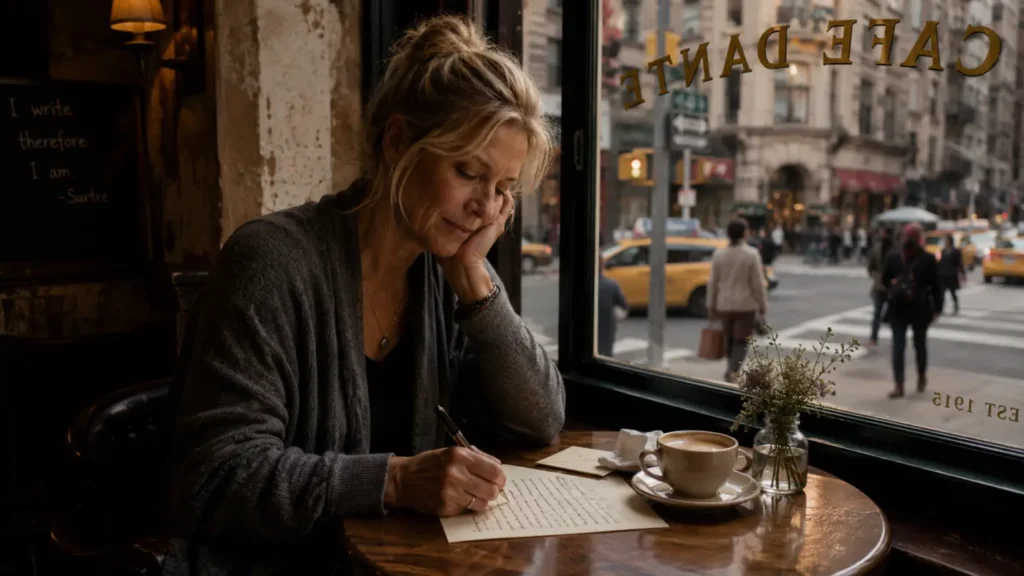


There’s a moment that keeps coming up for people with unsent letters. It’s usually not dramatic. It’s more like a sentence gets stuck in your throat for the hundredth time, or you replay a conversation in the shower and realize you’re still arguing with someone who isn’t even there.
That’s usually when this kind of writing starts helping. Not because it fixes everything. Just because it finally gives all that unsaid material somewhere to go.
If you need the short version early: an unsent letter is exactly what it sounds like. You write to the person, version of yourself, memory, feeling, or unfinished situation you can’t fully speak to out loud. You say the real thing. You do not prepare it for delivery. You do not make it polite unless politeness is honestly what you feel. The point isn’t performance. The point is relief, clarity, honesty, and sometimes grief that can finally move a little.
What is an unsent letter, really?
At the surface level, it’s a letter you write and don’t send.
But that simple description misses the part that matters most. An unsent letter is private emotional language. It gives shape to what has been looping, mutating, shrinking, exploding, or going numb inside you. A lot of people think they need a perfect reason to write one. They don’t. You don’t need a breakup, a funeral, a betrayal, or some huge life event that would make other people nod and say yes, that qualifies.
You can write one because:
- someone hurt you and you never said it clearly
- you keep rehearsing a conversation that will never happen
- you miss someone and there’s nowhere appropriate to put that
- you forgive someone in theory but your body still hasn’t caught up
- you’re angry in a way that feels childish and real at the same time
- you need to say goodbye
- you need to say no
- you need to say I loved you
- you need to say you scared me
- you need to say I didn’t deserve that
- you need to say I’m sorry, even if the apology won’t be received
That’s the actual territory.
An unsent letter isn’t a legal statement. It isn’t a persuasive essay. It isn’t evidence. It isn’t even necessarily “good writing.” In fact, when people try too hard to make it sound beautiful, they often drift away from the truth and into something polished but emotionally dead.
You are not trying to impress the page. You’re trying to stop hiding from it.
Why write something you’ll never send?
Because not everything unfinished can be resolved in relationship.
That’s the hard part. People often imagine closure as a cooperative event. You talk. They listen. You both suddenly become emotionally literate at the same time. There’s a pause, some tears, one useful sentence, and then the whole thing gently releases. This process is a key part of writing unsent letters for healing.
Sometimes that happens. A lot of the time, it doesn’t.
The other person may be unavailable, unsafe, uninterested, dead, defensive, gone, changed, confusing, or simply not capable of meeting you in the place where the truth lives. And sometimes you are the one who knows that sending it would create more harm than healing.
So the letter becomes a place where you stop negotiating with that reality for a minute. This approach is similar to writing a closure letter you do not send, which helps find peace without needing a response.
Writing an unsent letter can help because it lets you:
- say the unedited thing
- discover what you actually feel, not just what sounds reasonable
- separate memory from interpretation
- release pressure before deciding whether any real conversation is needed
- grieve what never happened
- honor what was real without reopening contact
- hear your own voice again
That last one matters more than people think.
A lot of emotional pain gets worse when your own perspective starts feeling inaccessible to you. You know something hurt. You know something matters. But your thoughts are scrambled, or too neat, or full of someone else’s language. The letter helps you hear yourself in full sentences again.
When does an unsent letter help most?
Usually when there’s emotional traffic with nowhere to go.
That can look messy in very ordinary ways. You’re distracted all the time. You keep checking your phone even though you know there won’t be a message. You feel flat around everyone except in private, where everything suddenly gets loud. Or you’re functioning fine, technically, but one tiny reminder sends you somewhere you didn’t expect. The letter helps you hear yourself in full sentences again. There’s research behind why that matters — psychologist James Pennebaker’s work on expressive writing found consistent evidence that translating difficult experiences into language reduces their emotional weight over time.
A few common moments where this practice helps:
After a conversation you never got to have
Maybe you froze. Maybe they interrupted. Maybe you stayed calm because that felt safer, and then later realized calm wasn’t the same as honest.
An unsent letter lets you say what belonged to you in that moment, even if the moment is gone.
After loss without clean closure
Death is the obvious version, but not the only one. There’s also estrangement, drifting apart, addiction, illness, changed personalities, family ruptures, and endings that never got named properly.
If your grief feels unorganized, writing letters to people you never got to say goodbye to can be one of the gentlest places to start.
When you’re angry but don’t actually want contact
This is a big one. Not every feeling is a call to action. Sometimes anger needs expression, not escalation.
The letter gives anger somewhere to exist without turning it into a message you regret at 11:40 p.m.
When your feelings are toward something that isn’t exactly a person
People write unsent letters to anxiety, addiction, illness, shame, motherhood, infertility, money, loneliness, faith, old homes, old bodies, lost time. The mind does this naturally. It gives shape to difficult things by addressing them.
If that’s where your writing wants to go, how to write to abstract concepts like anxiety, loss, and dreams can help you stop overthinking the format.
When you can’t tell whether you need to speak or just need to process
This is where unsent letters are especially useful. They create distance between feeling and action. You get to say everything first, privately, before deciding whether anything needs to happen in the outside world.
That pause saves people from a lot of impulsive contact.
What makes an unsent letter different from journaling?
They overlap. A lot.
But they’re not quite the same thing.
Journaling is often open-ended. You follow your thoughts. You record what happened. You track patterns. You notice your mood. It can be reflective, practical, messy, structured, repetitive, all of it.
An unsent letter has an addressee. Even if that addressee is symbolic.
That changes the emotional posture of the writing. Instead of “here is what I think,” the energy becomes “here is what I need to say to you.” That can unlock very different material. More directness. More emotion. More honesty. Sometimes more clarity than you expected.
If regular journaling feels too vague when you’re overwhelmed, letter writing can give the feeling a container. If unsent letters feel too intense, journaling can help you warm up. Some people move back and forth between the two.
There’s also a style of practice that blends them well through unsent letter journaling, especially if you want something between freewriting and full letter form.
And if grief is part of what’s happening, journaling techniques for processing unexpressed grief can give you more room around the letter itself.
Who do you write to?
This is where people often stall out for no good reason. They think the answer has to be obvious. Sometimes it is. Often it isn’t.
You can write to:
- a person you love
- a person you hate
- a person you miss
- someone who died
- someone you no longer speak to
- someone you see every day but can’t be honest with
- your younger self
- your future self
- a version of yourself who stayed silent
- a version of yourself who made the decision
- an illness
- a season of life
- your fear
- your body
- your faith
- the apology you never got
- the home you left
- the child you wanted
- the person you used to be before something happened
If you’re drawn inward more than outward, writing letters to your younger or future self can be surprisingly direct. People sometimes expect that kind of letter to feel soft and inspirational. It often ends up being more honest than that, in a good way.
The real test is simple: who or what are you already talking to in your head?
That’s usually your answer.
Do you need a format?
Not really. But a little structure helps when emotions are all over the place.

A lot of people delay writing because they think they need the right opening line, the right order, the right tone. They don’t. Start anywhere real.
You can begin with:
- I don’t know how to say this, but
- Here’s what I never got to tell you
- I’m still angry about
- What hurts is
- I keep replaying
- The truth is
- I wanted
- I wish
- I need to say this somewhere
- You don’t get to know this, but
- I miss
- I’m not ready to forgive you for
- I think I’m finally ready to admit
- I still don’t understand why
That’s enough.
If you need more shape than that, the simplest working structure is this:
Start with what brings you to the page
What happened. What keeps bothering you. What you wish had gone differently. Why this still has emotional charge.
Not background first. Not the entire history of the relationship unless that’s what you genuinely need. Start where the heat is.
Say the thing you keep avoiding
Usually there’s one sentence you keep circling.
It might be: you scared me. I needed you. I was ashamed. I wanted you to choose me. I knew and pretended I didn’t. I’m still waiting for an apology I may never get. I wanted one more ordinary day. I loved you and resented you at the same time.
That sentence tends to organize the rest.
Let the contradictions stay
Good unsent letters are often emotionally inconsistent because people are emotionally inconsistent. You can miss someone and be furious with them. You can forgive someone and still not want them back in your life. You can know a choice was right and still grieve it.
Let the letter hold more than one truth.
End where your honesty runs out
You do not need a neat resolution. You do not need an uplifting closing line. You do not need “I release you” unless you actually feel that. Forced closure has a fake smell to it, and your nervous system usually knows.
You can end with confusion. You can end with a wish. You can end with a boundary. You can end with “that’s all I have today.”
That’s still a real ending.
What do you actually put in the letter?
Whatever is true enough to belong there.
That sounds vague, but it gets clearer fast once you start.
Here are the kinds of things people often include, whether or not they expected to:
The facts as you experienced them
Not court-proof facts. Not objective universal facts. Just what happened from your side.
What was said. What wasn’t said. What changed. What you noticed in your body. What you remember. What you keep remembering even when you wish you wouldn’t.
The feeling underneath the obvious feeling
Anger often has grief under it. Numbness often has overwhelm under it. Calm often has fear under it. Niceness often has resentment under it.
If the first layer sounds a little too clean, there may be more underneath.
What you wanted
This is one of the hardest parts for many people. It can feel childish, embarrassing, too needy, too late, too exposed.
Still, it matters.
Sometimes the whole letter turns when you let yourself write the plain thing: I wanted you to stay. I wanted you to ask one more question. I wanted you to notice. I wanted you to protect me. I wanted to be chosen without having to perform for it.
That kind of sentence can be brutal. It can also be relieving in a way that more intellectual writing never reaches.
What was never acknowledged
A lot of unresolved pain isn’t only about what happened. It’s about what happened never being named.
The letter lets you name it.
What you understand now
This part doesn’t have to be wise. It just has to be honest. Maybe you see more of the pattern now. Maybe you don’t. Maybe all you understand is that something in you has been carrying this for too long.
That counts.
What if you don’t want the letter to be all rage or all grief?
Then don’t make it do that.
One mistake people make is assuming an unsent letter has to be a dramatic purge. It can be. But it can also be thoughtful, conflicted, tender, funny in places, deeply ordinary, or strangely calm.
You can write a letter that says:
- I’m not angry anymore, but I’m still sad
- I can see your limitations and still feel hurt by them
- I’m grateful for parts of this and damaged by other parts
- I don’t need you back; I just need to stop carrying this alone
- I’m writing because silence has become heavier than honesty
You don’t need to choose one emotional register and stay there. Real letters breathe more than that.
If you want a gentle structure for moving through different emotional layers, the 3-letter sequence: raw, refined, reflective can help. Sometimes one letter can’t do the whole job. Sometimes you need one messy version, one clearer version, and one version that looks at what changed.
How honest should you be?
More honest than you would be in a conversation. Less performative than you would be in a speech.
That’s the sweet spot.
Because the letter is not being sent, you don’t need to manage the other person’s reactions inside the writing. You don’t need to soften every line, anticipate every objection, or phrase things in the most acceptable way. That freedom is part of why the exercise works.
At the same time, honesty is not the same thing as exaggeration.
When people finally get access to their anger or grief, they sometimes swing hard into absolute language. You ruined everything. You never cared. It was all fake. Sometimes those statements are emotionally understandable but not actually true. If they are the truest thing in the moment, write them. Just know that another layer may come after.
The page can hold escalation. It can also hold correction.
A useful question while writing is: what am I trying not to admit here?
Usually that opens the letter in the right direction.
What if writing makes you feel worse at first?
That can happen.
Not always. But often enough that it’s worth saying plainly.
Putting language to pain can bring it closer before it brings relief. Something you’ve kept half-contained becomes more vivid once it has words. You may cry. You may feel shaky. You may feel silly for doing it and then strangely raw afterward. You may write two paragraphs and suddenly need to walk around the room and look out a window like the room itself has become emotionally loud.
That does not automatically mean the practice is wrong for you.
It may just mean you touched something real.
A few ways to make it more workable:
Keep the writing window small
You do not need to excavate your entire history in one sitting. Ten or fifteen focused minutes is often enough, especially if the topic has real charge.
Stopping while you still feel steady is allowed.
Ground yourself before and after
Drink water. Sit somewhere you can leave easily. Put your feet on the floor. Write by hand if that helps you slow down. Don’t do your deepest letter-writing five minutes before a work meeting if you can avoid it. This sounds obvious, yet people do it all the time and then wonder why the rest of the day feels haunted.
Don’t confuse activation with progress
If a letter leaves you flooded, spiraling, or unable to reorient, smaller steps may help more than pushing through. You might switch to journaling, write only three sentences, or focus on one memory instead of the whole relationship.
Get support when the material is bigger than the page
An unsent letter is a tool, not a substitute for care. If you’re dealing with trauma, severe grief, depression, self-harm thoughts, abuse, or anything that leaves you feeling unsafe with yourself, professional support matters. The page can open things. It doesn’t always know how to close them well.
What do you do after you write it?
This part matters almost as much as the letter.
Because once the truth is on the page, you have to decide what kind of object it is now. A release? A record? A beginning? A one-time practice? Something to revisit?
You have options.
Put it away
A lot of letters do their job the moment they are written. You don’t need to reread them immediately. You don’t need to analyze them. Fold it. Close the notebook. Save the file. Let it exist.
Read it once and notice what surprises you
Sometimes one sentence will stand out because it’s more honest than the rest. Sometimes the pattern becomes obvious only after you see it written back to yourself.
When rereading, pay attention to:
- what repeats
- where your tone changes
- what you still avoid naming
- where your body reacts
- whether you are asking for contact, clarity, apology, safety, or simply witness
Write a second version later
The first letter is often heat. The second one can be meaning.
If the first pass is chaotic or intense, wait a day or two and write again. You may find the core message is smaller and more precise than the original flood suggested.
Destroy it if that feels right
Rip it up. Burn it safely. Delete it. Shred it. Some people need the symbolic act of release. Some don’t. Neither response is more enlightened.
Keep it as a marker
Sometimes the value of the letter shows up later. You read it months later and realize the charge has changed. Or you see that you’ve been asking the same question in different forms for years. That kind of pattern recognition can be useful.
If you want to notice change over time without turning it into homework, tracking emotional progress after writing unsent letters can help you keep it simple.
Should you ever send an unsent letter?
Sometimes. But not quickly.
This is probably the section people want a rule for, and there really isn’t one that fits every situation.
The safest default is this: write it as unsent first, and keep it unsent for a while.
Why? Because the emotional truth that belongs in private writing is not always the same truth that belongs in a real-life conversation. A letter written for release may contain blame, rawness, old details, misfires, or intensity that helps you understand yourself but won’t help another person hear you.
Before sending anything, ask:
- do you want expression, response, repair, or impact
- is this person capable of receiving it well enough to matter
- would sending this create more clarity or more entanglement
- are you hoping the letter will finally make them become someone else
- if they ignore it, minimize it, or react badly, will that destabilize you
- would a conversation, shorter message, or firmer boundary work better
A very unglamorous truth: people sometimes want to send the letter not because it’s wise, but because they want the pain witnessed by the exact person who caused it. That wish is understandable. It just doesn’t always lead anywhere good.
If you’re considering sending, it often helps to separate the drafts. One letter for truth. Another for communication. Those are not always the same document.
What if you freeze when you try to start?
That’s normal. The blank page can feel weirdly exposing, especially when you already know the subject hurts.
Try reducing the stakes.
Instead of “write the letter,” try:
Write for five minutes only
Set a timer and stop when it ends. Most people can face five minutes. “Until I’m done” feels bigger and fuzzier.
Start in the middle
You do not need “Dear ____” unless that helps. You can start with the sentence that already exists in your head.
Use sentence stems
A few that tend to work:
- What I never say out loud is
- The part I keep minimizing is
- If I stop trying to be fair for a minute
- What still stings is
- I didn’t realize until later
- I keep pretending I’m over
- The thing I wanted from you was
- Here’s what I wish someone had noticed
Write badly on purpose
This helps more than people expect. If you secretly believe the letter should be elegant, wise, or coherent, you’ll keep editing yourself out of honesty. Give yourself permission to be repetitive, clumsy, blunt, dramatic, or unfinished.
There’s a slightly embarrassing thing people do here: they spend twenty minutes choosing a notebook, opening the perfect document, adjusting the lamp, making tea, finding the right pen, and somehow still not writing the first sentence. It’s a very human delay tactic. If you notice yourself doing that, you probably don’t need better ambiance. You probably need one ugly line on the page.
What if the letter turns out to be about you?
That happens all the time.
You start writing to someone else and slowly realize the real conversation is with the version of you who stayed, agreed, froze, chased, tolerated, lied, hoped, ignored, or endured. That shift can feel uncomfortable because it removes the fantasy that clarity lives entirely outside you.
But it’s often the most useful turn in the whole practice.
Self-directed letters can help with:
- self-forgiveness
- regret
- shame
- identity shifts
- old coping patterns
- grief for the person you had to become
- tenderness toward the person you were before you knew better
These letters don’t have to be soft to be healing. Sometimes what you owe yourself first is not reassurance but truth. Then compassion can come in later, once the truth stops needing to bang on the door.
Does handwriting matter?
Only if it changes what happens inside you.
Some people access emotion more easily by hand because the pace is slower and there’s less temptation to edit. Some need the speed of typing because their thoughts move faster than their hand can keep up. Some like notes apps because the privacy feels easier. Some need real paper because the physicality makes it feel more honest.
There isn’t a morally superior format here. There’s just the one that gets you closer to the truth.
If you’re stuck between options, hand-written vs digital: choosing your medium can help you think through privacy, pace, emotional access, and what you’ll actually use.
How do you know the letter “worked”?
Usually not by some cinematic feeling of closure.
More often, the signs are quieter.
You may notice:
- the mental replay softens a little
- you stop composing imaginary speeches in the background of your day
- the feeling becomes more specific and less foggy
- you know what part is grief and what part is anger
- you feel less pressure to contact the person immediately
- you understand what you actually wanted
- you sleep a little better
- you cry and then feel less crowded inside
- you realize this is not done, but it’s moving
That last one is worth trusting.
Emotional writing doesn’t have to complete a feeling to be useful. Sometimes it just turns the feeling from a sealed room into a door you can open and close.
And sometimes the first letter doesn’t “work” in any dramatic way at all. It feels flat. Forced. awkward. Maybe even boring. That doesn’t mean you failed. It may mean you wrote from the part of you that was still managing the truth. A second or third pass can be completely different.
If you want the practice to go deeper
One letter can help a lot. A sequence can help more.
Not because you need to turn this into a system. Just because the first thing you write is rarely the only thing there.
You might notice a progression like this:
- first letter: anger
- second letter: grief
- third letter: what you needed
- fourth letter: the boundary or goodbye
Or:
- first letter: what happened
- second letter: what it meant to you
- third letter: what you want now
That kind of progression can be surprisingly clarifying, especially when a relationship or loss carries multiple layers at once.
For a broader view of the practice itself, the complete guide to writing unsent letters for healing goes deeper into how people use these letters as part of emotional processing, not just as a one-off exercise.
A few things that make the whole practice gentler
Not easier, exactly. Just gentler.
Keep the letter private if privacy helps honesty
If there’s even a small part of you imagining someone reading it, you may start performing instead of telling the truth. That includes the fantasy of one day “accidentally” letting the person see it. If you want raw honesty, make the privacy real.
Don’t force forgiveness into the ending
Forgiveness has become one of those words people drag into rooms where it hasn’t earned the right to be yet. You do not need to forgive in order to write. You do not need to forgive in order to heal. You may someday forgive. You may not. The page is still available to you either way.
Let small details into the letter
Specificity often unlocks feeling better than abstract language does. Not “you were absent,” but “you looked at your phone while I was trying to tell you I was scared.” Not “I miss you,” but “I still think about the way you handed me the grocery list without looking up.”
Tiny details carry a lot.
Stop before you become numb
There’s a point in emotionally charged writing where you either go deeper or you leave yourself. If you notice yourself flattening out, getting overly analytical, or writing like you’re submitting a report, it may be time to stop for now.
Trust the sentence that embarrasses you a little
Not the one that feels theatrical. The one that feels plain and a little exposing. That’s often the live wire.
Need help putting the hard words on the page?
If you know what you feel but still freeze when you try to write it, use a guided path to start the letter, stay honest, and say what’s been stuck for too long.