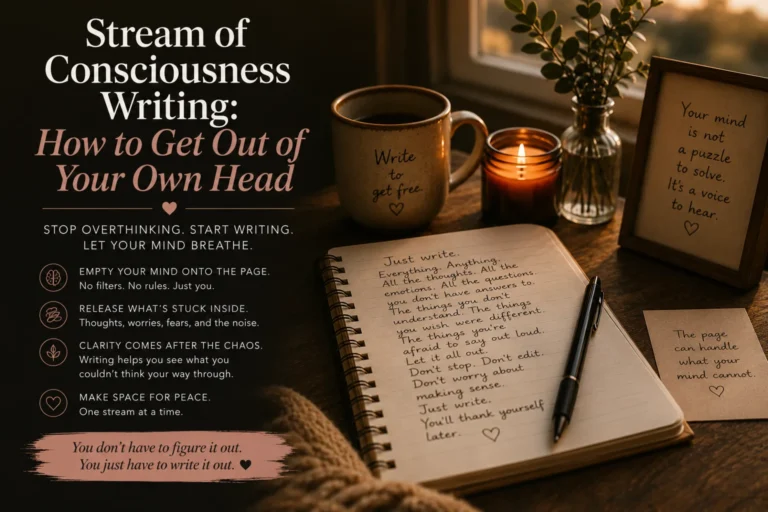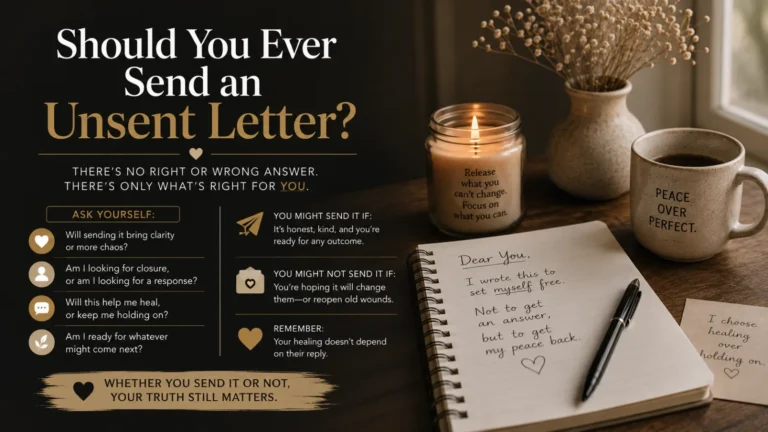

Most people do not need a perfect ritual to begin an unsent letters project. They need a way to stop circling the same thoughts and put them somewhere honest. That is really the starting point: not writing beautifully, not figuring everything out first, just giving difficult feelings a place to land.
An unsent letters project is exactly what it sounds like. A private practice of writing letters that are not meant to be delivered. Sometimes the letter is to another person. Sometimes it is to a version of yourself, to grief, to anger, to a relationship that ended badly, or to someone who will never fully understand what happened. The point is not contact. The point is expression, clarity, and sometimes a little relief.
That distinction matters more than it seems. A lot of people freeze because they start writing as if they are building a case, preparing for a confrontation, or trying to produce something wise. Usually that shuts the whole thing down. An unsent letter works better when it is allowed to be unfinished, contradictory, or embarrassingly direct. That is often where the useful part is hiding.
What this project is actually for
People usually come to unsent letters when ordinary thinking is no longer doing the job. The mind keeps rehearsing a conversation that cannot happen, should not happen, or already happened badly. The body stays tense. The same memories return with slightly different edits. Writing can interrupt that loop by turning something abstract and repetitive into something visible.
That does not mean the project will create instant closure. Closure is not always a clean feeling. Sometimes it looks more like less inner noise. Sometimes it is being able to name what hurt without immediately getting pulled back under by it. Sometimes it is realizing there are three different feelings tangled together and they need different words.
That is also why some people find it useful to understand the broader idea of therapeutic letter writing before they begin. Not because the project has to be formal, but because it helps to know this kind of writing is less about performance and more about processing.
Pick a shape that feels easy enough to begin
The best format is the one a person will actually use. Some people need paper because handwriting slows them down and makes the letter feel more real. Some need a notes app because feelings arrive on a bus, in a parking lot, or five minutes before bed. Some want a typed document because their hand hurts after half a page and they do not want physical discomfort turning into an excuse.
The mistake here is assuming one format is more sincere than another. It is not. A handwritten letter is not automatically deeper. A typed letter is not automatically detached. A draft text that never gets sent can still hold something painfully true.
If the choice itself becomes a stall point, it helps to look at which format fits the moment and move on. The project should not become one more thing to optimize.
Start smaller than your emotions are telling you to
When people imagine writing for closure, they often picture one huge letter that says everything at once. That can work, but it also tends to overwhelm the nervous system before the first paragraph is done. It is usually easier to begin with one letter about one specific thing.
Not the whole relationship. One conversation.
Not all the grief. The hospital waiting room. The voicemail. The birthday that felt wrong afterward.
Not every family dynamic since childhood. The sentence that still echoes.
Specificity helps because the mind can hold it without flooding. It also keeps the letter from drifting into vague summaries that sound tidy but do not actually release much. “You hurt me for years” may be true, but “I still remember standing in the kitchen and realizing you were not going to protect me” often gets closer to the real emotional charge.
Give the letter a job
A letter does not need a perfect structure, but it helps if it knows why it exists. Otherwise people start writing and immediately get lost between anger, explanation, memory, and self-editing.
A simple way to begin is to decide what this letter is trying to do. Just one thing.
- Say what never felt safe to say
- Name what was lost
- End an imaginary argument
- Tell the truth without softening it
- Acknowledge harm without waiting for permission
- Offer compassion to a past version of yourself
That last one matters more than people expect. Some letters are not really for the person who caused pain. They are for the self that absorbed it. In those cases, a project can shift from confrontation to repair, and writing toward self-compassion can be more stabilizing than trying to deliver a final verdict on what happened.
Let the first draft be messier than feels respectable
This is the part many people resist. They want the letter to sound fair, reasonable, maybe even a little elevated. But emotional closure usually does not begin with polished language. It begins with language that is alive enough to tell the truth.
That might mean repetition. It might mean writing the same sentence three different ways until one of them lands. It might mean admitting something slightly unflattering, like the fact that part of you still wants an apology from someone you no longer even respect. Not a glamorous insight. Usually an important one.
People often discover that their first honest sentence arrives after several paragraphs of explanation. That is fine. The explanation was not wasted. It was the path to the sentence that had actual weight in it.
If a person keeps drifting into speeches, moral arguments, or tidy summaries, it usually helps to return to plain sentence stems:
- What I never said was…
- What still hurts is…
- What I wanted from you was…
- What I know now is…
- What I am done carrying is…
Simple language tends to reach further than impressive language here.
Protect the project from common derailments
There are a few patterns that quietly make unsent letters less useful.
Writing as if the other person will read it
Even when the letter is unsent, many people write defensively, as though they are preparing for cross-examination. They over-explain. They gather evidence. They try to sound impossible to argue with. The result is often emotionally thin, because the real audience is still the other person’s imagined reaction.
A better question is whether the letter sounds true to the writer, not whether it sounds persuasive.
Trying to be fair too early
Fairness has its place. So does nuance. But demanding perfect balance in the first draft often becomes a way of muting pain before it has been acknowledged. A later pass can add complexity. The first pass usually needs honesty more than diplomacy.
Going too far when already overwhelmed
This work can bring up a lot, especially if the topic involves trauma, grief, abuse, or longstanding family pain. There is no prize for pushing through distress until someone feels wrecked. Short sessions are allowed. Stopping mid-letter is allowed. Putting the page away and coming back next week is allowed.
Some people also benefit from reading through common mistakes in unsent letters before they build momentum around habits that keep the writing stuck.
Create a container, not just a burst of emotion
An unsent letters or unsent texts project works better when it has some kind of container around it. Not a strict system. Just enough shape that the writing feels held.
That might look like setting aside twenty minutes once a week. Or keeping one notebook for letters and nothing else. Or naming a few categories so the project does not become a pile of emotional scraps with no thread through them.
Some people sort their letters by recipient. Others sort by theme: anger, grief, unfinished conversations, younger self, boundaries, forgiveness, things that still make no sense. There is no correct filing method. The point is to make returning easier than avoiding.
It can also help to decide in advance what happens after each session. Close the notebook. Save the file in one folder. Take a walk. Drink water. Sit quietly for five minutes. Small things, but they matter. Emotional expression without any landing can leave people feeling raw and strangely untethered.
You do not have to write only to other people
This is where the project often gets deeper.
A letter to a parent, former partner, friend, or sibling makes intuitive sense. But some of the most clarifying letters are written to parts of life that cannot answer back anyway: to panic, to shame, to illness, to a house that no longer exists, to a future that did not happen.
A letter to your earlier self can be especially powerful when the stuck feeling is not just anger at someone else, but grief for who you had to be in order to get through something. Those letters can sound awkward at first. Then suddenly not awkward at all.
There is also room for letters that contradict each other. One letter can be furious. Another can be grieving. Another can say, very plainly, that part of the writer still misses someone who was not good for them. Contradiction does not mean the project is failing. It usually means the person is getting closer to something real.
Know when private writing is enough, and when more support would help
Unsent letters can do a lot. They can clarify thought, surface buried feeling, loosen rehearsed conversations, and give shape to grief or anger that has been living as noise. But they are not a cure-all, and they are not a substitute for qualified support when someone is feeling unsafe, severely overwhelmed, or unable to function.
If writing brings up intense distress that lingers, or if the person finds themselves spiraling harder each time they try, it may help to slow the project down or bring it into therapy or another appropriate support setting. Some material is workable alone. Some is heavier than that. Knowing the difference is not failure. It is judgment.
What to do with the letters afterward
Nothing dramatic is required.
Some people keep every letter because the collection becomes a record of change. Some destroy them because the point was expression, not preservation. Some reread only after a few weeks, when they can tell the difference between what still feels true and what belonged to one intense afternoon.
The only thing that tends to backfire is making a ceremonial rule too early. Burning every letter might sound cleansing until one of them contains a truth the writer needs again later. Saving every letter might sound wise until the stack starts to feel like a shrine to pain. It is usually better to let the use of the project reveal itself over time.
A good unsent letters project is not neat. It may begin with one person and turn out to be about five others. It may start as anger and become grief. It may produce a few pages that feel flat before one letter finally says the thing that had been sitting in the chest for years.
That is still movement. Not always satisfying movement. But real enough to matter.
Begin your first unsent letter today
If you have been replaying the same conversation in your head, use a simple private prompt to get the words out of the loop and onto the page.