
I kept noticing the same thing when looking at people’s letter-writing setups: the actual sticking point usually wasn’t what to say. It was where to say it. Pen and paper, phone notes, laptop, tablet. That choice changes more than people expect.
Short version: hand-written and digital both work. Neither is more “real.” The better option is the one that makes you less self-conscious, less interrupted, and more willing to finish the thought instead of hovering over it.
If you’re using unsent letters for reflection, release, or emotional processing, the medium matters because it shapes your pace. Hand-writing tends to slow you down and make the writing feel weightier. Digital usually makes it easier to keep going, edit, store, and return later. That’s really the tradeoff. Less romance. More mechanics.
If you haven’t read the bigger framework yet, The Complete Guide to Writing Unsent Letters for Healing lays out the overall practice. This part is narrower: just how to choose the format without turning it into a personality test.
So what actually changes when you switch mediums?
Mostly three things: speed, inhibition, and aftercare.
Speed is obvious. Most people can type faster than they can write by hand. That means digital can be better when the point is catching a flood of thoughts before they scatter. If you already know you lose momentum when your hand can’t keep up, that matters.
Inhibition is trickier. Some people feel more exposed on paper because the words look permanent. Other people feel more exposed on a screen because typing feels closer to sending, posting, or documenting. Same task, completely different nervous system response.
Then there’s aftercare, which sounds a little dramatic, but it’s real. What happens to the letter after you write it? A notebook in a drawer feels different from a file synced across devices. A note you can delete in two taps feels different from a page you’d have to tear up. Sometimes that practical detail is the whole decision.
This is where people get weirdly idealistic. They pick the medium they think they’re supposed to use, not the one they’ll actually keep using.
When does hand-writing help more?
Usually when the problem is emotional overload, mental speed, or a sense that everything in your head is too slick and rehearsed.
Hand-writing has friction. That’s the point. The slowness can help you sit with something long enough to notice what you’re actually trying to say. Not the polished version. Not the fake reasonable version. The sentence underneath that one.
It can also make the letter feel more contained. One page. Two pages. A physical beginning and end. For some people, that’s grounding in a way a blinking cursor isn’t.
It’s also useful if you want the writing to connect to ritual. If you already know you want to fold the letter, tuck it away, rip it up, or incorporate some symbolic ending, paper makes that easy. If that part matters to you, Using Rituals: Burning, Mailing, Burying Your Letters gets into the practical side without making it feel mystical for the sake of it.
A few cases where hand-writing tends to help:
- You’re writing about grief, anger, or something raw and you keep skating past it on a keyboard
- You want fewer distractions
- You over-edit while typing
- You want the writing to feel private in a tactile way
- You’re trying to slow your own mind down a little
That said, hand-writing is not automatically deeper. Sometimes it’s just slower and more annoying. If your wrist hurts, your hand cramps, or your thoughts vanish while you’re trying to keep up, that’s not noble. That’s just a bad fit.
When does digital make more sense?
More often than people admit.
Digital writing is helpful when your thoughts come fast, when your emotions show up as mental clutter more than body-level heaviness, or when the biggest obstacle is simply getting the words out before you back away from them.
Typing can lower the barrier to entry. You open a notes app, start, and keep moving. No notebook to find. No concern about messy handwriting. No staring at a blank page that suddenly feels ceremonial.
It also helps if your letters tend to branch. You start writing to one person and realize you’re actually writing to the version of yourself from two years ago, then maybe to your anxiety, then maybe to the idea of closure itself. That kind of associative writing is easier to follow digitally because you can move, add, trim, and revisit without turning the page into chaos.
That’s especially true if your letters aren’t always to actual people. If you’re working with more symbolic or internal material, How to Write to Abstract Concepts: Anxiety, Loss, Dreams can help, because that’s where medium choice gets unexpectedly important. Abstract writing often benefits from speed.
Digital also wins on accessibility. Larger text. Voice typing. Easier storage. Searchability if you’re noticing patterns over time. Those aren’t small things.
And honestly, some people write more truthfully when the words don’t look precious. A plain text document can feel less loaded than a beautiful journal page. Less performance. Less pressure to make the pain look meaningful.
What if privacy is the real issue?
Then start there, because privacy anxiety will wreck the whole exercise.
This is one of the most practical differences between hand-written and digital, and it gets brushed aside way too often. People talk about embodiment and sensory experience, which is fine, but if you’re distracted by “what if someone finds this,” you’re not going very deep anyway.
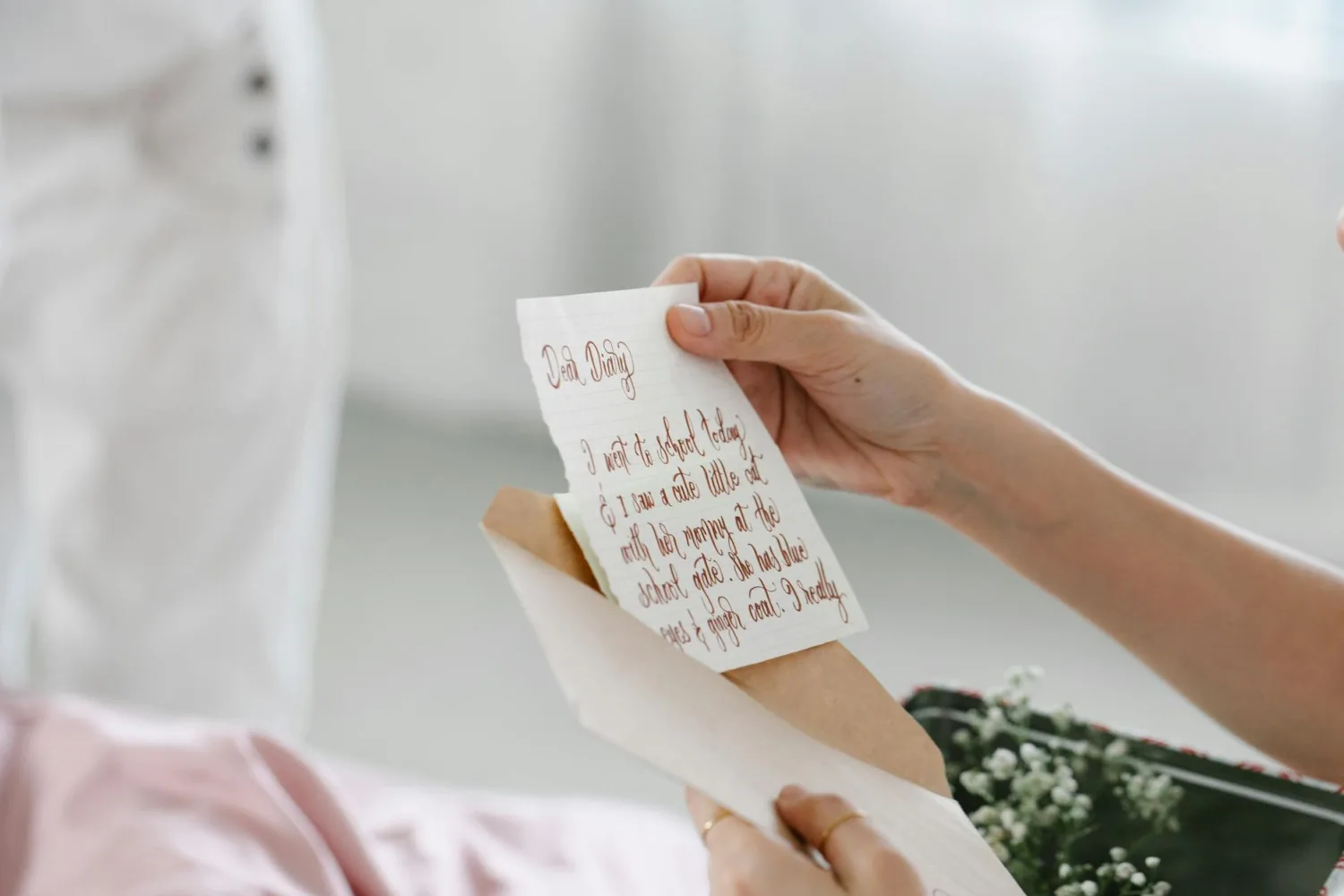
Paper privacy depends on where you live, who has access to your things, and how comfortable you are keeping physical evidence around. A notebook under the bed is private until it isn’t.
Digital privacy depends on devices, passwords, syncing, backups, shared accounts, and whether you trust yourself not to accidentally reread or send something at the worst possible moment. Also not nothing.
Neither option is universally safer. You just want the one that lets your body unclench enough to write honestly.
A decent rule here: if you’re going to spend the whole session planning how to hide the result, choose a medium that’s easier to secure or easier to destroy. That might mean paper you can shred. It might mean a locked note. It might mean writing in a temporary document and deleting it right after. Practical beats poetic here.
Which one helps you say the thing you keep avoiding?
That’s really the question.
Some people avoid the truth by typing because typing makes it easy to outrun themselves. You can produce three paragraphs of explanation without ever landing on the actual sentence.
Some people avoid the truth by hand-writing because the seriousness of paper makes them censor themselves. The page feels too official. Too intimate. Too permanent.
This is why “just journal by hand” is not universally helpful advice. It works beautifully for some people. For others, it creates instant stiffness.
One useful test is to write the first ten minutes in one medium and then switch. No theory. Just notice what changes.
When people do this, a few patterns show up:
- hand-written starts honest but stalls
- digital starts messy but gets somewhere
- hand-written goes deeper after digital clears the clutter
- digital gets too polished too fast
- one medium feels strangely theatrical, which is usually a sign it’s not the right one for that letter
That last one is worth paying attention to. If you catch yourself composing instead of expressing, change formats.
A slightly unflattering truth here: people will sometimes spend more time researching “the best” medium than actually writing the letter. Very understandable. Also a little convenient. The method debate can become a neat way not to feel anything.
Does the medium change the outcome?
Sometimes, yes. But not in a magic way.
Hand-writing can change the outcome because it changes tempo. You may notice more sensation, more hesitation, more emotional resistance. That can help if your goal is contact with what you’re feeling.
Digital can change the outcome because it changes flow. You may get more material, clearer phrasing, and more honesty through momentum. That can help if your goal is expression without getting stuck.
The medium can also change whether you come back to the practice. This matters more than people think. The “best” method isn’t the one that creates the most moving single session. It’s the one you can return to without bargaining with yourself for forty minutes first.
That’s why hybrid setups often work well.
Is it fine to use both?
Yes. Probably more than fine.
A lot of people do better with a split approach:
- type when the thoughts are fast and messy
- hand-write when something needs weight
- type a rough letter, then copy part of it by hand
- hand-write the letter, then scan or photograph it if you want to keep it without storing the original
- use digital for regular practice and paper for letters tied to a ritual or turning point
This usually works because different stages need different tools. Drafting and feeling are not always the same task. Neither are release and reflection.
If you’re someone who tends to freeze at the beginning, digital can get you moving. If you tend to detach once you’re moving, hand-writing can bring you back into the room a bit.
No idea if that applies to you, but it’s a pattern that comes up a lot.
What should you actually choose today?
Not your forever medium. Just today’s.
Choose hand-writing if you want slowness, containment, physical privacy you can control, or a stronger sense that the act itself matters.
Choose digital if you want momentum, easier editing, better accessibility, less friction, or less pressure around how the page looks.
Choose both if one gets you started and the other gets you honest.
If you’re genuinely split, use the least dramatic test possible: write one paragraph by hand and one paragraph digitally on the same topic. Pick the one that makes you forget yourself a little faster.
That’s usually the one.
Common Questions
Is hand-writing better for emotional healing?
Not automatically. It can feel more grounded because it’s slower and more physical, but if that slowness makes you shut down or overthink, digital may help more.
Does typing make the letter less meaningful?
No. Meaning comes from honesty, not from ink. If typing helps you say what you actually mean, it’s doing the job.
What if hand-writing hurts my hand or feels physically exhausting?
Then don’t force it. Pain and fatigue can pull you out of the process fast. Typing, voice-to-text, or shorter hand-written sections may work better.
Should you keep the letters or delete them?
Either is fine. The better question is whether keeping them supports reflection or keeps you stuck in rereading. If storage itself makes you uneasy, build the disposal decision into the practice from the start.
Is one medium more private than the other?
Only depending on your real situation. A hidden notebook can be less secure than a locked digital note, and a synced app can be less private than a page you tear up immediately.
What if you start in one medium and want to switch halfway through?
Do it. That usually means the first format got you to the edge of something and the second one might help you finish saying it. There’s no prize for staying consistent if consistent is making the writing worse.