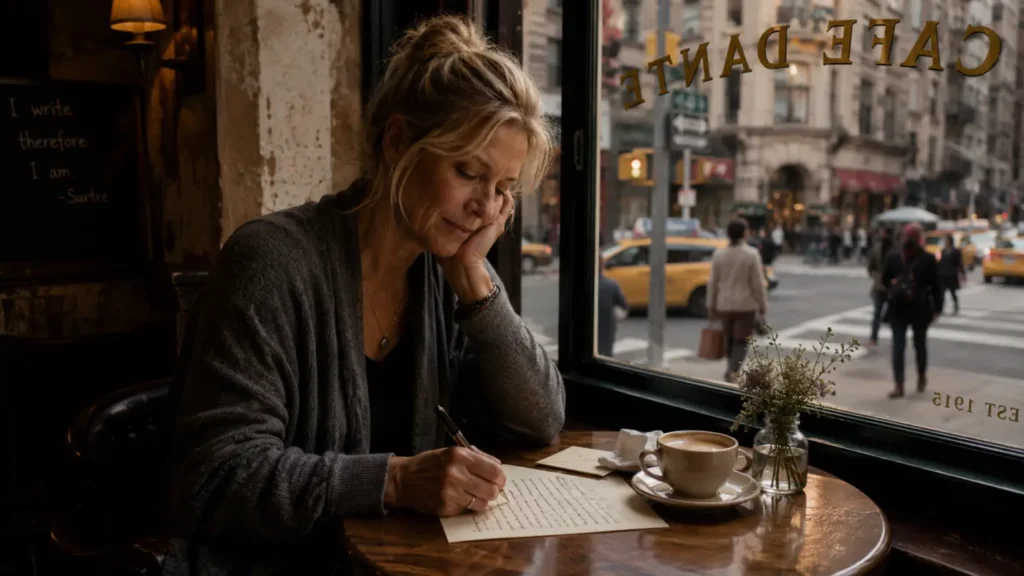

Writing a letter to your younger or future self gives shape to thoughts that are usually blurry. It can help you name what you needed then, what you know now, or what you hope to remember later. The useful part isn’t making it sound profound. It’s being specific enough that the letter feels true.
You can write to the version of you who was scared, impulsive, lonely, hopeful, ashamed, or just doing their best with limited information. You can also write to the version of you who hasn’t made the hard decision yet, who might forget what matters, or who may need evidence that this season won’t last forever.
What should you understand first?
A letter to your younger self and a letter to your future self do slightly different jobs. The first usually helps you look back with more honesty and compassion. The second helps you look ahead with more intention and less panic. Same format, different emotional direction.
There’s something oddly clarifying about putting “dear you” at the top of a page and choosing a version of yourself to talk to.
Not because it magically fixes anything. Usually it doesn’t. But it does make vague feelings behave a little better. They stop pacing around in your head and sit down long enough to be spoken to.
If you’ve already read The Complete Guide to Writing Unsent Letters for Healing, this is one of the more personal branches of that practice. It’s still an unsent letter. The difference is that the person receiving it is you, just not this exact version.
Why does this kind of letter hit so hard?
Because you already know where some of the tender spots are.
You know the year that changed things. You know the version of you that kept apologizing too much, or tried too hard to be easy, or acted like not caring was somehow cooler than wanting something. You also know the version of you that hasn’t happened yet but already
That makes these letters emotionally direct in a way regular journaling sometimes isn’t. A blank page can let you drift. A specific version of you gives the writing a target.
And honestly, that target matters.
When people try this and come away thinking it felt flat, the problem usually isn’t the exercise itself. It’s that they wrote to a vague idea of themselves instead of a real one. “Dear younger me” is too broad for a lot of people. “Dear me at seventeen, the week before graduation, pretending you don’t care who leaves” is a different story.
Specificity is what turns this from a writing prompt into an actual conversation.
Should you write to your younger self or your future self first?
Usually, start with the version who feels louder.
If your mind keeps circling an old memory, an old wound, an old embarrassment you somehow still replay at 2 a.m. for no reason your nervous system can explain, your younger self probably has more to say.
If you’re stuck on a decision, scared about what’s next, or feeling like you’re drifting and need to hear your own values in plain language, a future-self letter may be more useful.
You do not need a perfect reason. You also do not need to be in a healed, wise, centered mood before you begin. That idea stops a lot of people. They think they need perspective before they write, when writing is often how perspective shows up.
One thing to watch: a younger-self letter can turn into self-correction really fast. You may start out wanting to comfort that earlier version of you and end up scolding them for not knowing what you know now. That usually lands badly, even on the page.
A future-self letter can drift the other way and become performance. Suddenly you’re writing like someone who has their life fully sorted and keeps artisanal notebooks and never avoids hard conversations. Not necessary. Also a little exhausting.
It helps to pick one honest function for the letter before you start:
- comfort
- witness
- warning
- forgiveness
- perspective
- remembering
Just one is enough.
What do you actually say to your younger self?
Start closer to the moment than you think.
Not “you’re stronger than you know.” That may be true, but it’s so general it barely lands. Try the thing that version of you actually needed to hear.
Maybe it’s:
- you’re not hard to love, you’re just around people who benefit from you doubting that
- this won’t make sense for a while
- you don’t have to act fine to deserve care
- you were right about what felt off
- you are about to confuse being chosen with being valued, and those are not the same thing
That kind of line has some weight to it.
A useful younger-self letter often includes three things: what was happening, what that version of you believed because of it, and what you want them to know now. Not in a formal structure. Just somewhere in the letter.
So instead of floating above the past, you go into it a little.
You name the room. The season. The relationship. The silence. The age. The misunderstanding. The thing nobody explained. The part where you blamed yourself because that felt cleaner than admitting someone else failed you.
That last part can be harder than people expect. Sometimes the most difficult thing about writing to your younger self isn’t sadness. It’s accuracy.
What if your younger self annoys you a little?
That’s more common than people admit.
Sometimes the younger version of you wasn’t just hurt. They were dramatic, self-protective, oblivious, reckless, approval-hungry, or deeply committed to making a terrible choice because it felt emotionally familiar. You may not feel immediate tenderness toward that version of yourself. You may feel secondhand embarrassment.
That doesn’t mean the letter won’t work.
It just means compassion may need to come after honesty, not before it.

You can write something like: you were trying very hard to be who other people could tolerate. Or: you kept calling it confusion because the truth would have changed your life. Or even: you were a little unbearable then, and also overwhelmed.
That last kind of sentence matters. Not because it’s polished. Because it holds two truths without flattening either one.
If you tend to split into either blame or softness, this exercise can show you a middle ground. You don’t have to make your younger self innocent to be kind to them. You just have to stop talking to them like they should’ve had information they didn’t have.
If that balance is hard, The 3‑Letter Sequence: Raw, Refined, Reflective can help. It gives you somewhere to put the messy first draft before you try to turn it into something clearer.
How do you write to your future self without sounding fake?
This is the part people often overdo.
They start addressing their future self like a movie monologue. Everything gets grand. Everything sounds significant. Meanwhile the most useful future-self letters are usually a lot more grounded.
Write to the version of you who will need reminding, not impressing.
That might mean saying:
- if you’re reading this because you’re tired, please eat something before deciding your whole life is broken
- don’t go back just because it feels familiar
- you wanted a quieter life for a reason
- if you’ve become successful but weirdly unavailable to yourself, that’s not the win you meant
- remember what mattered before other people started praising you for the wrong things
A future-self letter works best when it contains real conditions, not just hopes. Not “I hope you’re happy.” More like, if you’re successful and still miserable, slow down and ask what got traded away. If you’re lonely, don’t pretend productivity solves that. If you’ve forgotten what this season taught you, here it is again.
That kind of letter becomes a record, not just a wish.
There’s also a simple practical option that gets overlooked: write to yourself six months from now instead of ten years from now. Shorter distance. Less performance. More truth.
Does this need to be emotional to be meaningful?
Not always.
Some letters come out raw immediately. Others are almost plainspoken. Both can work.
A surprisingly good letter to your future self might include reminders about the kind of life you don’t want to accidentally build. A letter to your younger self might mostly be explanation. Not dramatic healing. Just finally saying, this is what was happening, and this is why you felt the way you did.
If emotion shows up, let it. If it doesn’t, don’t force it to prove the exercise “worked.”
One unglamorous truth: a lot of people stop too early because the first few lines feel awkward. Of course they do. You are literally writing to another version of yourself. There is no version of that that feels immediately casual.
The trick is to stay long enough to get past the polite opening.
Usually the real letter starts about seven or eight lines in, right after the part where your brain is still trying to be reasonable and well-behaved.
What should you avoid putting in the letter?
A few things tend to derail it.
First, don’t turn it into a motivational speech. You’re not trying to sound inspiring. You’re trying to tell the truth in a form you can receive.
Second, don’t use the letter to rewrite history in a way that lets everyone else off the hook. Reflection is useful. Revisionism isn’t.
Third, be careful with promises. A future-self letter that says everything will work out exactly the way you want may feel good for a minute, then hollow later. It’s better to offer steadier ground than certainty. You may not get the exact life you imagine. You can still remind yourself what kind of person you want to be inside it.
And if writing directly to yourself feels strangely blocked, there’s a side door: How to Write to Abstract Concepts: Anxiety, Loss, Dreams. Sometimes it’s easier to address fear, grief, ambition, or regret first and come back to yourself after.
If you don’t know where to start, try this
Pick one version of you. Give them a place and a time.
Then begin with one of these:
- You think this is your fault, and it isn’t.
- You’re about to make this mean something cruel about yourself.
- I won’t pretend this part was easy.
- By the time you read this, you may have forgotten why you promised yourself this mattered.
- You do not need to become less complicated to deserve peace.
Then keep going until the letter says something you didn’t know you were holding.
That’s usually the moment worth staying for.
Common Questions
Is a letter to your younger self the same as journaling?
Not quite. Journaling is usually open-ended, while a letter to your younger self has a clear recipient and emotional direction. That structure often makes it easier to say something direct instead of circling around it.
How long should a letter to your future self be?
Long enough to become specific. For some people that’s one page; for others it’s several. If it still sounds vague or performative, keep going until you reach concrete reminders, fears, or hopes.
Should you reread these letters later?
Usually yes, but not immediately if the letter leaves you emotionally raw. A future-self letter is often meant to be reread on purpose, while a younger-self letter may be more about writing it than revisiting it often. If rereading makes you spiral, step back and return later.
What if writing to yourself feels embarrassing?
That’s normal. It can feel awkward at first because the format is unusually direct. Most of the usefulness shows up after the first few stiff lines, so the embarrassment isn’t always a sign to stop.
Can this bring up emotions you weren’t expecting?
Yes. Writing to another version of yourself can uncover grief, anger, shame, or tenderness pretty quickly. If that starts to feel overwhelming, pause, ground yourself, and come back when you have more support or steadiness.
Is it better to handwrite the letter or type it?
Whichever helps you stay honest longer. Handwriting can slow you down in a useful way, but typing may help if you think quickly or don’t want the physical friction. The better format is the one that keeps you writing past the careful version of yourself.